When warmer weather arrives, pollen on windows can quickly turn otherwise bright glazing into a dusty, hazy surface. Fine airborne particles settle on panes, frames, roof panels and sills, particularly during dry spells when there is little rain to wash debris away.
For homeowners, the issue is mostly about appearance and maintenance. Seasonal residue can make large glazed areas look dull, especially when it mixes with dust, light rain or other airborne material.
Why Does Pollen on Windows Become More Noticeable in Summer?
The UK season usually runs from spring into early autumn, although the timing varies depending on plant type and weather conditions.
The Met Office explains that grass levels typically peak during early summer. Warm, dry weather can encourage particles to be released, while suitable breezes help carry them through the air. Rainfall generally lowers the amount circulating at a given time.
Once those fine grains settle on exterior glazing, they can form a visible dusty layer. A brief shower may then move existing residue around the surface, leaving patches or marks as the moisture dries.
That is why glass can look clear one day and noticeably dull soon afterwards.
Which Parts of a Home Collect the Most Seasonal Residue?
Not every part of a property is affected equally. Exposure makes a significant difference.
Glazing may develop build-up faster when it is:
Close to trees, hedges or flowering plants
Facing prevailing winds
Near open fields or grassed areas
Sheltered beneath rooflines where rainfall provides little natural rinsing
Beside roads where dust can mix with organic particles
Positioned horizontally or at a shallow angle
Large roof panels can make the problem particularly obvious because they provide a broad surface for airborne debris to settle on.
The same principle applies throughout the year. Our guide to why windows get dirty quickly explains how exposure, nearby vegetation, traffic and weather can cause one part of a property to become marked faster than another.
How Can Summer Build-Up Affect a Conservatory?
A glazed extension can make seasonal deposits much easier to see than standard vertical panes.
Roof sections receive direct exposure from above, while frames and bars can provide small areas where dust and organic material collect.
Common signs include:
A fine, dusty film across the roof
Marks appearing after light rainfall
Build-up around frames and glazing bars
Dirt becoming more noticeable in strong sunlight
Debris gathering around awkward corners and edges
This does not mean ordinary seasonal deposits are automatically damaging the glass. For most homeowners, the main problem is visual. A large glazed room can begin to look dull relatively quickly when exterior surfaces develop a visible film.
If upper sections are difficult to reach safely, our conservatory cleaning service explains how we approach exterior glass and roof sections using suitable ground-based equipment.
Does Rain Remove Summer Deposits From Glass?
Not necessarily.
Rain can reduce the amount of airborne material circulating at the time. The Met Office notes that rainfall can cause a marked reduction in atmospheric levels, with prolonged rainfall generally having a greater effect.
However, rain falling from the sky is not the same as thoroughly washing a pane.
If dust and plant material are already resting on the surface, a short shower can move the residue around rather than remove all of it. When the moisture evaporates, remaining material may become more visible.
This explains why glazing can sometimes appear worse after a brief shower, even though the rain itself has reduced what remains airborne.
How to Remove Pollen From Windows Safely
For ground-floor areas that can be comfortably reached, a simple approach is normally sufficient.
1. Remove Loose Material First
Avoid rubbing dry particles firmly across the surface.
A gentle initial rinse can help remove loose debris before you begin washing the pane itself.
2. Choose Soft Equipment
Use a soft sponge, microfibre cloth or another suitable non-abrasive tool.
Avoid aggressive pads or implements that could mark the glass or damage surrounding finishes.
3. Include Frames and Sills
Treating only the central pane can leave deposits around the edges.
Frames, corners and sills often collect airborne debris, so dealing with these areas at the same time provides a more complete result.
4. Avoid Unsafe Access
Do not improvise with stools, unsuitable ladders or unstable platforms to reach roof sections or upper floors.
Difficult glazing is one of the situations where specialist equipment can make professional maintenance worthwhile.
5. Inspect the Surface After It Dries
Some marks are easier to see once the glass is completely dry.
If light residue remains, repeat the process rather than using excessive pressure.
For harder-to-reach areas, read our guide explaining how water-fed pole cleaning works.
When Is Summer Window Cleaning in East Lothian Most Useful?
There is no single date that suits every property.
The right timing depends on exposure, nearby vegetation and how quickly exterior glazing begins to lose its clear appearance.
Extra attention may be useful:
After a prolonged dry spell
During periods of high grass activity
When nearby trees or hedges are shedding heavily
Before guests or summer gatherings
When roof glazing has developed a visible film
When upper areas are difficult to maintain safely
The most practical approach is to judge the rate of build-up at your own property rather than following a rigid calendar.
Our guide to how often you should clean windows covers how weather, trees, roads and local exposure can affect a sensible maintenance schedule.

Can Purified Water Help With Seasonal Build-Up?
Yes. Purified water can be useful for routine exterior maintenance.
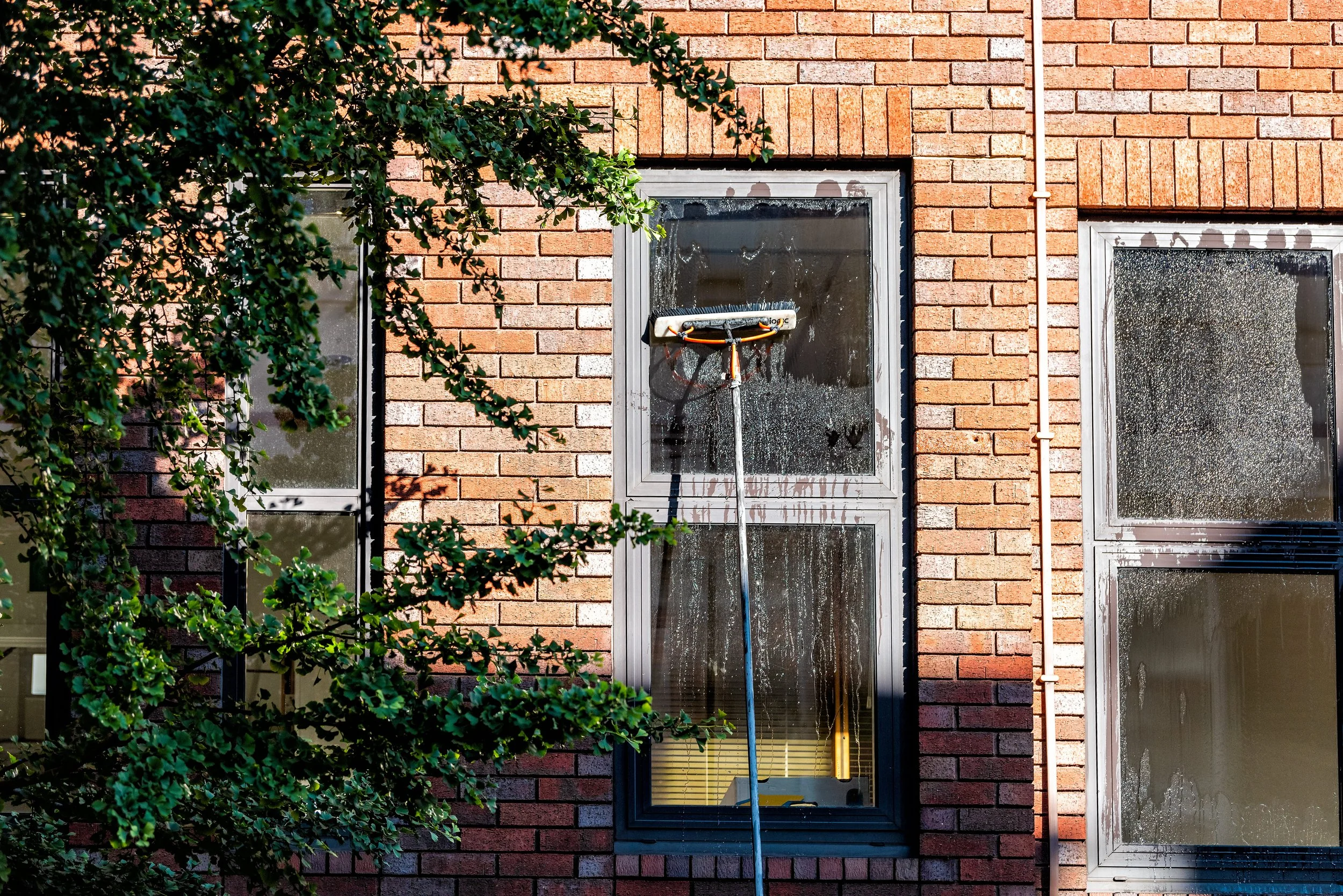
At Bright & Clear, we use water-fed pole equipment for many residential jobs. A specialist brush agitates dirt and seasonal deposits before the surface is thoroughly rinsed with purified water.
The method provides several practical advantages:
Ground-level access to many upper-storey areas
Frames and sills treated alongside the glass
Reduced reliance on ladders around the property
Useful reach for extensions and awkward angles
No conventional detergent residue left behind
You can learn more about our water-fed pole cleaning service and how the system works.
Why Can Regular Exterior Care Make Summer Maintenance Easier?
Seasonal debris is generally easier to manage before multiple layers of dust, bird mess and environmental grime accumulate together.
Regular maintenance can help keep exterior glass looking more consistent throughout the year. It can be particularly useful for homes with large glazed areas, where small changes in clarity become noticeable quickly.
For homeowners looking for conservatory cleaning in East Lothian or window cleaning in Haddington, the most appropriate frequency will depend on the property itself.
A sheltered residential street can experience very different exposure from an open rural location or coastal property.
The aim is not to chase a perfect surface every day. It is to keep maintenance manageable and prevent seasonal build-up from dominating the appearance of the home.
What Can the UK Forecast Tell You?
The Met Office pollen forecast provides forecasts for up to five days across the UK.
The broader UK season typically runs between March and September, although timing and intensity vary according to vegetation and weather conditions.
Checking the forecast can also provide useful context if exterior glazing seems to become dusty again unusually quickly.
Fresh deposits shortly after maintenance do not necessarily indicate that the previous work was ineffective. They may simply reflect another period when large amounts of airborne material are being transported locally.
When Should You Consider Professional Help?
Professional help can make sense when access is difficult, substantial roof glazing needs attention or you simply want exterior maintenance taken care of regularly.
Bright & Clear Windows provides residential glass care across East Lothian using purified water and ground-based pole equipment where suitable. Frames and sills can also be included as part of the service.
If seasonal build-up is making your property look dull, request a free quote and tell us which areas need attention.